
Selling a House That Needs a New Roof: Insurance, Buyers, and Your Options
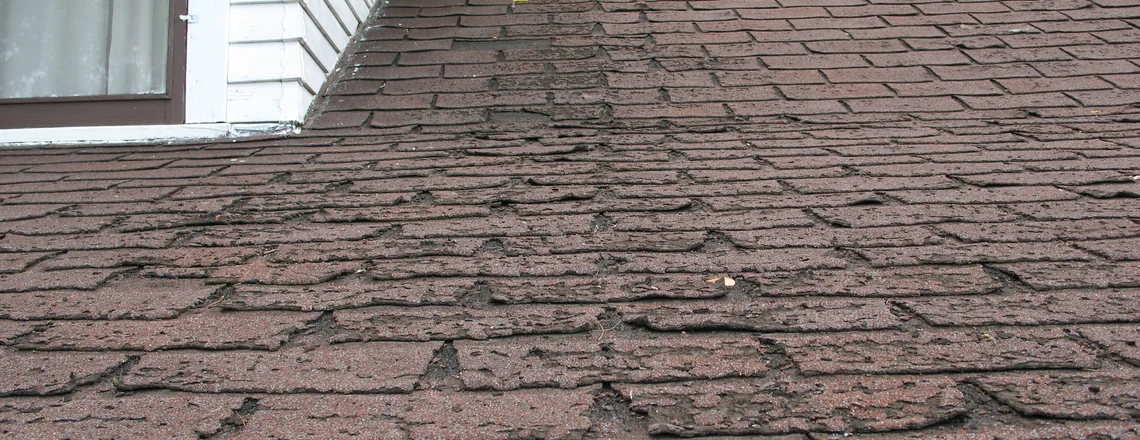
You already know the roof is done. Maybe a storm finished it, maybe it just got old and the granules are sitting in the gutters, maybe your insurance company put it in a letter before you noticed it yourself. Now you want to sell, and the question in your head is whether you have to put a new roof on a house you are leaving. You do not. But the roof quietly decides who is allowed to buy your house and on what terms, and that is the part worth understanding before you hand anybody a deposit. This guide covers what a lender’s appraiser is required to do, why the insurance side usually sets the real deadline, what actually drives a roofing bid, and the two honest ways to be finished with it.
Key highlights
- An FHA appraiser has to flag it. HUD’s rules say the appraiser must report a roof with less than two years of remaining physical life and make the appraisal subject to inspection by a professional roofer.
- Conventional loans have a condition floor. Fannie Mae will not buy a loan on a property rated C6, and deficiencies affecting safety, soundness or structural integrity must be repaired to reach at least a C5.
- Florida wrote roof age into statute. An insurer may not refuse to issue or renew a homeowner’s policy solely because of roof age when the roof is under 15 years old, and at 15 years or older an inspection showing 5 years or more of useful life does the same job.
- A separate roof deductible in Florida is capped at the lesser of 2 percent of your Coverage A limit or 50 percent of the cost to replace the roof.
- An as-is cash sale skips the appraiser, the roofer and the permit, and closes in weeks on a date you pick.
The short answer
Yes, you can sell a house that needs a new roof, and houses do it every week. No law requires you to replace it first. What changes is the size of the buyer pool. Roughly speaking you have three routes. Replace the roof, then list, and reach every buyer including the financed ones. List it as it is and accept that some lenders will balk, which usually means waiting for a buyer with cash or a renovation loan. Or sell as-is to a cash buyer who prices the roof in and closes on your date. Which one is right depends less on the house than on two numbers only you know: how much cash you can put into a place you are leaving, and how many more months you can comfortably pay for it.
What a lender’s appraiser is required to do
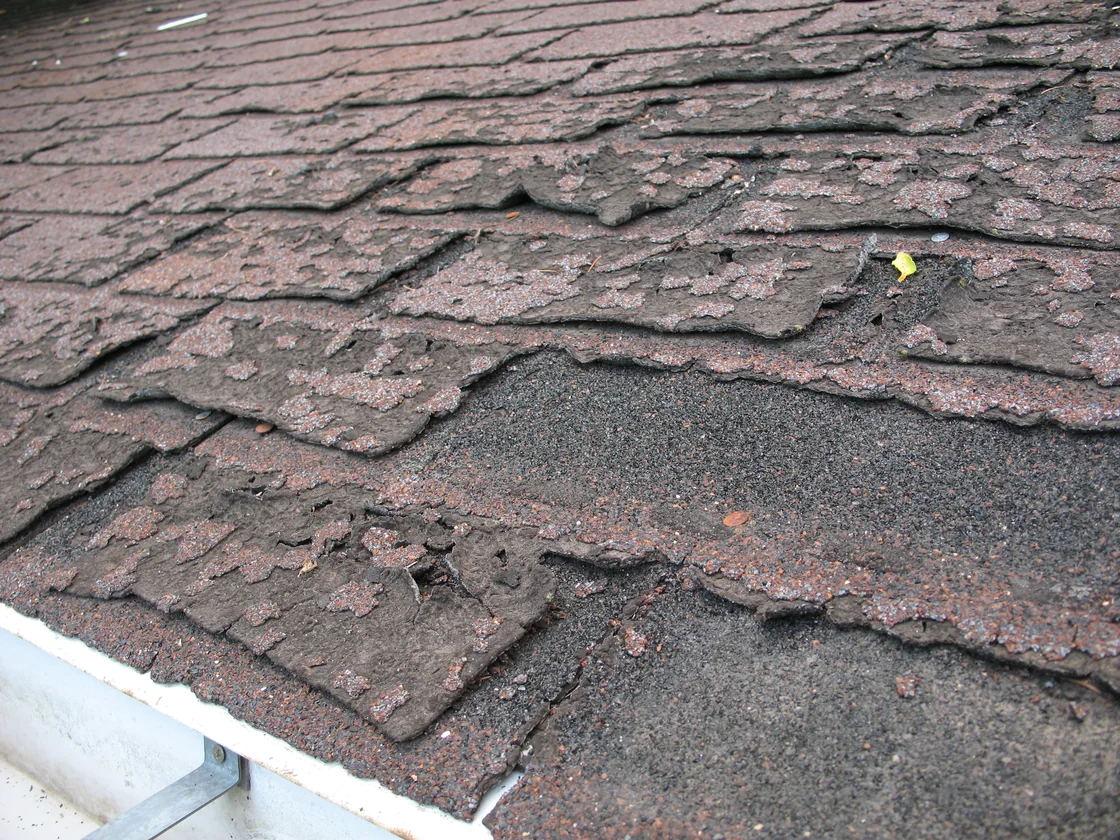
This is the part sellers find out too late, usually three weeks into a contract. An appraiser is not just guessing at a number. On a government backed loan the appraiser is working from a written rulebook, and the roof has its own paragraph in it.
For FHA loans, HUD Handbook 4000.1 tells the appraiser to notify the lender of a deficiency if the roof covering “does not prevent entrance of moisture or provide reasonable future utility, durability and economy of maintenance and does not have a remaining physical life of at least two years”. It goes further and says the appraiser “must report if the roof has less than two years of remaining life, and make the appraisal subject to inspection by a professional roofer”. That last phrase is the one that costs money. Subject to means the lender will not fund until somebody qualified has been up there and the condition is cleared.
Conventional loans work differently but land in a similar place. Fannie Mae grades the property on a condition scale in its Selling Guide. A C5 house has “obvious deferred maintenance” and needs “some significant repairs”, and is still eligible in as-is condition. A C6 house has damage or deferred maintenance “severe enough to affect the safety, soundness, or structural integrity of the improvements”, and the guide is blunt about it: loans on C6 properties “are not eligible for sale to Fannie Mae”. Anything hitting safety, soundness or structural integrity has to be repaired to reach at least a C5 first.
Read those two together and you get the real rule, which is more forgiving than most sellers fear. A tired roof does not stop a sale. A leaking roof, or one that has let water into the structure, does. Worn shingles with a couple of years left are a price conversation. Water in the decking is a condition the lender will not fund around.
And then the awkward question: who pays? Formally, whoever the contract says. Practically, it is almost always the seller, because the buyer cannot close without the repair and cannot usually pay for it either, having just put every dollar into the down payment. One genuine alternative exists and is worth raising with your agent. HUD’s 203(k) program lets a borrower “purchase and rehabilitate a Structure” inside one mortgage, with a Standard 203(k) covering remodeling and repairs above a $5,000 minimum and a Limited 203(k) for smaller non-structural work. A buyer using one can finance the roof instead of asking you to replace it.
Insurance is usually the real deadline
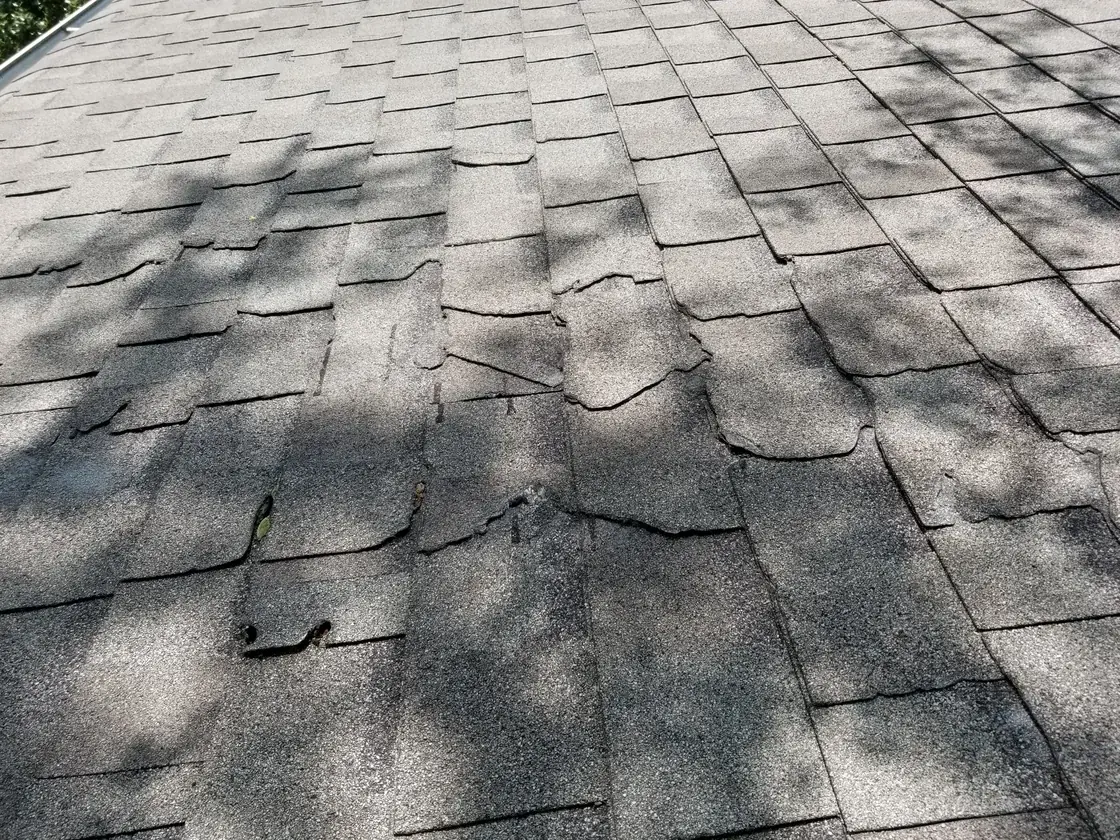
Here is the thing most sellers underestimate. A lender will not close a loan on a house that cannot be insured, so if local carriers have started declining roofs like yours, your buyer pool shrinks whether or not the appraiser says a word. In a lot of markets the insurance letter arrives long before anyone talks about selling, and it is the thing that starts the conversation.
Florida is the state that put numbers on this, which makes it a useful yardstick even if you live elsewhere. Florida Statutes section 627.7011(5) says an insurer “may not refuse to issue or refuse to renew a homeowner’s policy insuring a residential structure with a roof that is less than 15 years old solely because of the age of the roof”. For a roof at least 15 years old, the insurer must let you pay for an inspection by an authorized inspector before it can require replacement as a condition of coverage, and it may not refuse on roof age alone “if an inspection of the roof of the residential structure performed by an authorized inspector indicates that the roof has 5 years or more of useful life remaining”. That subsection applies to policies issued or renewed on or after July 1, 2022.
The same statute defines how the clock is counted, which catches people out. Roof age runs from “the last date on which 100 percent of the roof’s surface area was built or replaced” under the code in effect at the time. Patching one slope in 2019 did not restart anything.
Money comes into it from a second direction. Florida Statutes section 627.701(10) lets a carrier apply a separate roof deductible, capped at “the lesser of 2 percent of the Coverage A limit of the policy or 50 percent of the cost to replace the roof”, and only on a claim adjusted on a replacement cost basis. If that is on your policy, a roof claim may hand you a much larger share of the bill than your regular deductible suggests. Most states have no statute like either of these, which means carriers there are free to make roof age an underwriting question with no floor at all.
The practical move, in any state: get a roof certification or inspection from a licensed roofer before you list, not after a buyer’s inspector raises it. If a roofer will put remaining life in writing, that document does more work for you than any amount of arguing. If your carrier has already dropped you, our guide on selling when you cannot afford the insurance covers where that usually goes.
The deadline nobody sends you a notice about: in Florida, 15 years is the line where a carrier can start asking about your roof, and the protection past it depends on an inspection you pay for showing 5 years or more of life left.
Nobody calls you on the anniversary. Ask your agent what your carrier does at renewal, in writing, before the renewal lands.
What actually drives a roofing bid
Roofing quotes vary wildly for the same house, and it is rarely because one roofer is cheating. It is because they priced different work. Before you compare numbers, make sure every bid spells out the same things:
- Squares and pitch. Roofers price by the square, which is 100 square feet, and a steep roof costs more to walk than a shallow one.
- Tear-off or overlay, and how many layers. Removing two layers is twice the labor and twice the dumpster of removing one.
- Decking. Nobody knows what is under the shingles until they are off. A good bid names a price per sheet of replacement plywood so the change order is not a surprise.
- The pieces around the field. Drip edge, valley metal, pipe boots, vents and chimney flashing. Old flashing under new shingles is where the next leak starts.
- Permit and inspection. Pulled by the contractor, in their name, and closed out at the end. An open permit shows up later as a title problem.
- Warranty, split out. The manufacturer covers the material, the roofer covers the labor, and the two are separate promises of different lengths.
There is a code trap in some states too. In Florida, Florida Statutes section 553.844(5) says that where a roof “was built, repaired, or replaced in compliance with the requirements of the 2007 Florida Building Code, or any subsequent editions” and 25 percent or more of it is being worked on, only the repaired portion must meet the current code. Read it the other way round and the point is clear: on an older roof that never met that standard, a large repair can pull you into a full replacement you did not budget for. Ask the roofer which side of that line your house sits on before you authorize a patch.
As for whether the money comes back, be realistic. A new roof mostly removes an objection rather than adding its own cost to your price, because buyers treat a sound roof as the baseline condition of a house, not a feature. That is not a reason to skip it. It is a reason to stop thinking of it as an investment and start thinking of it as the cost of reaching financed buyers. We work through that arithmetic properly in how much you actually lose selling as-is.
What you have to tell a buyer
Say what you know. Disclosure rules differ by state, but roofs show up on the forms explicitly, because everybody knows this is where the arguments start. The Texas seller’s disclosure notice set out in Texas Property Code section 5.008 puts the roof in its very first block, asking for “Roof Type” and “Age” as an approximate figure, then asks whether the seller is aware of any listed item “that are not in working condition, that have known defects”.
That is a low bar and an easy one to clear honestly. Write down the age if you know it, say so plainly if you do not, and describe any leak you have had and what was done about it. A buyer who learns about a stain on the bedroom ceiling from you will negotiate. A buyer who finds it themselves after you said nothing starts thinking about lawyers. And if a previous roof went on without a permit, read selling a house with unpermitted work, because that is a separate thread that surfaces at the title company.
Your options, side by side
For a seller with a roof at the end of its life, the realistic menu is short:
| Your option | Best when | The trade-off |
|---|---|---|
| Replace the roof, then list | The house is otherwise sound, you have the cash, and you want every financed buyer in the market able to bid | Money up front on a house you are leaving, a month or more before you even list, and you rarely get the full cost back in the price |
| List it as-is and price the roof in | The roof is worn but not leaking, and you can wait for the right buyer | Every inspection reopens the subject, some lenders will not fund it, and the house can sit while financed buyers come and go |
| Offer a credit at closing | The lender is willing to fund with the roof as it is and the buyer simply wants the money | A credit does not satisfy an appraisal made subject to a roofer’s inspection, and lenders cap how much credit they will allow |
| Wait for a renovation loan buyer | The house is attractive enough that somebody will take on the work with a 203(k) or similar | A much smaller buyer pool, a longer underwriting process and more that can fall apart before closing |
| Sell as-is for cash | The roof is failing, insurance is already a problem, or you want it finished without spending anything first | The price reflects the roof and the work left; in exchange there is no roofer, no permit, no appraisal and a closing in weeks |
How an as-is cash sale works when the roof is shot
The mechanics are deliberately boring. You describe the house honestly, roof included: how old it is, where it leaks, what the insurance company said. You get a written cash offer, usually within about a day. If you accept, a title company takes over, confirms the title, clears any liens or unpaid charges out of the proceeds and prepares the deed. There is no lender, so there is no appraiser making the sale subject to a roofer, no underwriter reading an inspection report on week five, and no insurance binder somebody has to approve before the money moves.
Closing lands on a date you choose, often two to three weeks out once title is clear. Nothing gets fixed first. The tarp stays where it is, the buckets in the attic stay where they are, and the buyer deals with all of it afterwards. If the roof went in a storm and you have an open claim, say so early, because who keeps the insurance proceeds is a term of the deal and is much easier to settle before a contract than after. Our guide to selling a storm damaged house as-is covers how those claims usually get handled, and what selling a house as-is actually means is the plain version of the rest.
How Sterling Home Offer helps
Roofs are one of the most common reasons people call us, so this is routine rather than an exception we tolerate. Here is what we offer, in writing. A no-obligation cash offer in about 24 hours, built on the real condition of the house and real nearby sales, not a headline number that shrinks after an inspection. Strictly as-is, so no roofer, no permit, no cleanup and no repairs of any kind. No agent commissions and no fees, so the offer is the number you keep. And your date is the date, whether that is two weeks away or parked until you are ready to move. If you would rather compare that against a traditional listing first, cash offer against a realtor lays both out honestly, including where an agent beats us.
The bottom line
An old roof does not stop you selling. It just sorts your buyers. Tired shingles with a couple of years left are a price conversation, and most buyers and most lenders will live with them. A roof that is letting water into the structure is different, because an FHA appraiser is required to flag it and Fannie Mae will not buy the loan at the bottom of the condition scale. Meanwhile the insurance side keeps its own clock, and in Florida that clock has 15 years printed on it. So pick on purpose. Spend the money and reach everybody, or keep the money and sell as-is to someone who prices the roof in and closes in weeks. What rarely works is doing nothing and hoping the next winter is gentle, because the roof is the one part of the house that only ever gets worse while you think about it.
Sources
- Single Family Housing Policy Handbook 4000.1, Minimum Property Requirements, Roof Covering: moisture, reasonable future utility and a remaining physical life of at least two years, and the appraisal made subject to inspection by a professional roofer. Also the 203(k) Rehabilitation Mortgage Insurance Program overview (U.S. Department of Housing and Urban Development)
- Selling Guide B4-1.3-06, Property Condition and Quality of Construction: condition ratings C5 and C6, eligibility in as-is condition and the repair requirement to reach a minimum C5 (Fannie Mae)
- Florida Statutes section 627.7011(5), roof age: the 15 year threshold, the authorized inspector, the 5 years of useful life remaining, how roof age is calculated and the July 1, 2022 effective date (The Florida Senate)
- Florida Statutes section 627.701(10), separate roof deductible: capped at the lesser of 2 percent of the Coverage A limit or 50 percent of the cost to replace the roof, applied only to claims adjusted on a replacement cost basis (The Florida Senate)
- Florida Statutes section 553.844(5), windstorm loss mitigation: where a roof complies with the 2007 Florida Building Code or later and 25 percent or more is repaired, replaced or recovered, only that portion must meet the current code (The Florida Senate)
- Texas Property Code section 5.008, seller’s disclosure of property condition: the notice form asking for roof type and approximate age, and for items not in working condition or with known defects (Texas Public Law)
Not putting a new roof on a house you are leaving?
We buy houses with old and failing roofs as-is, for cash. No roofer, no permit, no repairs. Get a no-obligation cash offer in 24 hours and pick your closing date.
Get my cash offer or call (888) 260-1777Old roof seller FAQs
Do I have to replace the roof before I sell the house?
No. There is no law that stops you selling a house with a worn out roof, and plenty of houses change hands every week with the roof left exactly as it is. What the roof decides is which buyers can get to the closing table. A cash buyer does not care. A financed buyer brings an appraiser and an insurer into the deal, and both of them have written rules about roofs, so the roof becomes their problem to solve before the loan funds.
Will the buyer’s lender force me to fix the roof?
It can effectively do that. Under HUD’s rules for FHA loans, the appraiser must notify the lender if the roof covering does not prevent entrance of moisture or does not have a remaining physical life of at least two years, must report a roof with less than two years of life left, and must make the appraisal subject to inspection by a professional roofer. On conventional loans Fannie Mae will not buy a loan on a property rated C6, and deficiencies affecting safety, soundness or structural integrity have to be repaired to reach at least a C5. In practice the work gets done before closing, and the seller usually pays for it, because the buyer cannot close without it.
Can I just give the buyer a credit for a new roof instead?
Sometimes, and it is worth asking. A seller credit at closing works when the lender is willing to fund the loan with the roof as it is, which usually means the roof is tired rather than failing. If the appraiser has made the appraisal subject to a roofer’s inspection, a credit will not satisfy that condition, because the lender wants the work finished, not funded. Some buyers can use a renovation loan instead: HUD’s 203(k) program exists to let a borrower purchase and rehabilitate a house in one mortgage.
My insurer will not renew the policy because of the roof age. Can I still sell?
Yes, and it is a common reason people decide to sell at all. The problem is that a financed buyer has to insure the house to close, so if carriers in your area are declining the roof, the pool of buyers who can finance it shrinks. Florida has written protection into statute: an insurer may not refuse to issue or renew a homeowner’s policy solely because of roof age where the roof is under 15 years old, and for a roof 15 years or older an inspection showing 5 years or more of useful life remaining protects you the same way. Most states have no equivalent rule, so a roof certification from a licensed roofer is worth getting before you list.
Does a new roof pay for itself when I sell?
Usually not in full. A new roof mostly removes an objection rather than adding its cost to the price, because buyers treat a sound roof as the normal condition of a house rather than an upgrade. That does not make replacing it wrong. It makes it a decision about which buyers you want to reach and how long you are willing to hold the house, not an investment you should expect to earn back dollar for dollar.
How fast can I sell a house that needs a roof?
With a cash buyer the roof does not set the timeline, the title work does. There is no appraiser making the sale subject to a roofer, no underwriter reading an inspection report and no insurance binder the lender has to approve before funding. A written offer usually comes within about a day, and closing is often two to three weeks out once title is clear. Replacing the roof first and then listing generally adds a month or more before the house even goes on the market.
This article is general information, not legal, tax or insurance advice. Lender appraisal rules, insurance statutes, building codes and seller disclosure requirements differ by state and by program and change over time, and every roof is different. Confirm your own situation with your insurance carrier, a licensed roofer, your local building department and a licensed professional in your state before making decisions about your home.