What “We Buy Houses” Companies Actually Do (and How to Tell the Good Ones)
The letter shows up in the mailbox. Sometimes it is a postcard, sometimes a handwritten envelope, sometimes a sign stapled to a utility pole at the end of your street. The words are always close to the same four: we buy houses. What almost nobody tells you is that those four words cover three completely different businesses, with three different sets of incentives, and the one you are talking to decides whether your sale is boring and quick or a slow motion disappointment. This guide is the plain version: who these companies are, where the offer number comes from, what the contract actually commits you to, and the two or three questions that sort the serious buyers from the rest in about a minute.
Key highlights
- Three businesses share the same sign. A buyer closing with its own money, a wholesaler selling your contract to someone else, and a large national brand are not the same deal and should not be judged the same way.
- The offer is a subtraction, not an opinion. It starts at what the house is worth repaired and works backwards through the repairs, the holding months and the buyer’s margin.
- The assignment clause is the one to read. It is what lets the company you met hand your contract to a stranger before closing.
- Several states now regulate wholesaling by name. Texas requires written disclosure of an equitable interest, Oklahoma requires a license, and South Carolina wrote wholesaling into its code.
- A buyer pays you. Nobody legitimate asks a seller for money upfront, and the Federal Trade Commission says charging upfront for mortgage relief promises is illegal.
The short answer
A “we buy houses” company buys a house that would be hard to sell the normal way, at a price that leaves room for the work and the risk, and closes without a lender in the room. That is the whole model, and there is nothing shady about it. The problems start when the company on the sign is not actually the company with the money, or when the number you shook hands on is not the number that reaches the closing table. You do not need to become an expert to protect yourself. You need to know which of the three businesses you are dealing with, and you need to read two paragraphs of the contract before you sign it. The rest of this guide explains both.
Three businesses, one sign
Everything downstream depends on this, so it is worth getting straight before anything else.
The buyer that closes with its own money
This is a company or an individual investor that signs a contract, funds the purchase, takes title, and then fixes and resells or rents the house. It carries the risk and it controls the closing date, which is exactly why it can promise one. It is also the only one of the three that can honestly tell you the deal is done when you sign.
The wholesaler
A wholesaler signs a contract with you, then sells that contract to an actual buyer for a fee, usually before closing. You may never learn the fee, and in many deals you never meet the person who ends up owning your house. Wholesaling is not automatically a scam and a good wholesaler does real work finding houses. The catch for you is simple: a wholesaler cannot guarantee a closing date because it does not control the money. If nobody on its buyer list takes the deal at the price it needs, the contract quietly dies and you are back at the start, several weeks older.
The large national brand
These are the venture-backed and franchise names that advertise instant offers. They are real buyers with real money, but their pricing is a model rather than a person, and their marketing has drawn regulator attention. In August 2022 the Federal Trade Commission said one of the biggest had been tricking sellers “into thinking that they could make more money selling their home” to it than on the open market, when in fact “the vast majority of consumers who sold to Opendoor actually lost thousands of dollars” compared with a traditional sale. The order was finalized that October at 62 million dollars, and it bars deceptive or unsubstantiated claims about what a seller will take home. We compare that model with a local cash purchase in detail here: cash offer versus an iBuyer.
How the offer number actually gets built

Sellers often expect a cash offer to be a discount off an online estimate. It is not. It is built from the other end, and once you see the order it stops feeling arbitrary.
The buyer starts with what the house will be worth after it is repaired, based on what comparable finished houses near you have actually sold for. From that it subtracts the repair budget, which on an older house is usually larger than the owner thinks, because it includes the things a buyer discovers rather than the things a seller lists. Then it subtracts the carrying cost of the months the work takes: taxes, insurance, utilities, and money that is not earning anything while it sits in your drywall. Then the cost of selling it again at the far end, which for most investors means an agent and closing costs. Whatever is left over, minus the margin that makes it worth doing at all, is your offer.
That is why the gap between a cash offer and a listing price is mostly roof, plumbing and time rather than greed. It is also why a buyer who gives you a confident number before seeing the house is telling you something about itself. We break the percentages down separately in what percentage cash home buyers actually pay.
Context helps here. Nationally the median existing-home price was 417,500 dollars in September 2026, the median home took 33 days on the market before going under contract, and all-cash sales were 27 percent of transactions, down from 30 percent a year earlier. Those 33 days are the clock starting, not stopping: they end at a signed contract, not at a closing, and a financed buyer’s loan, appraisal and insurance still come after.
What the contract really says
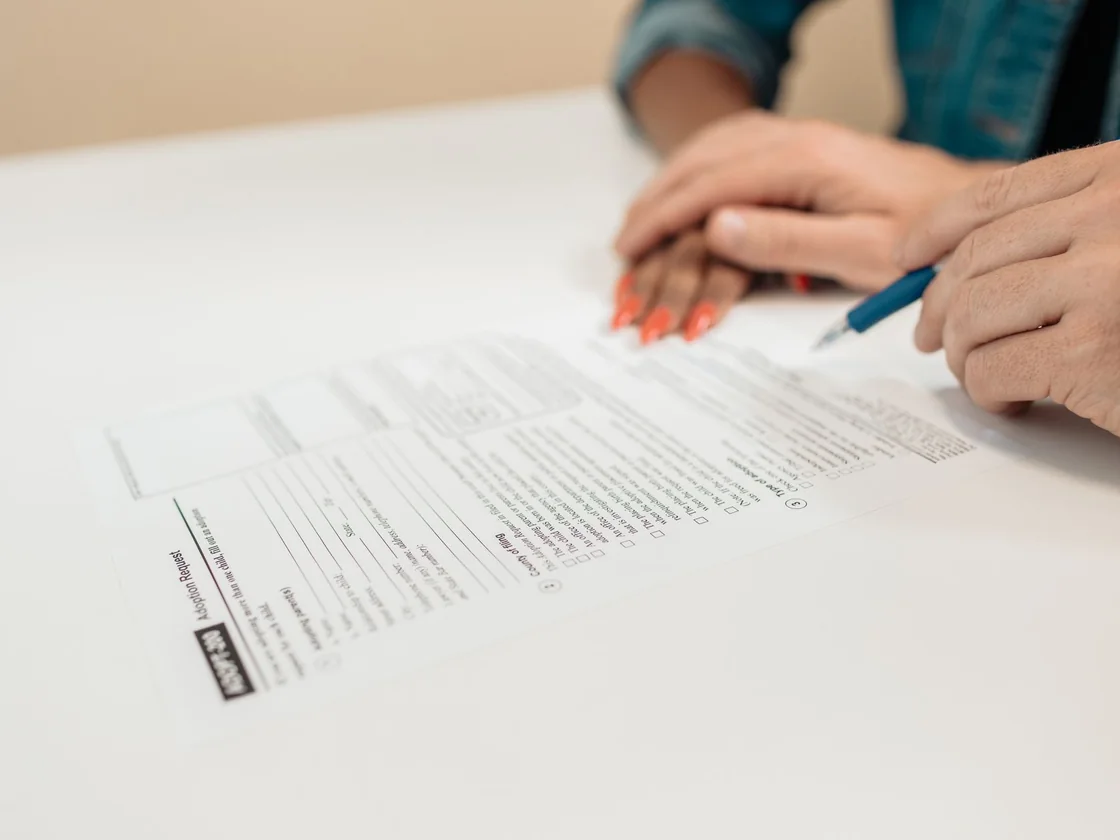
Most sellers read the price and skim the rest. Three paragraphs are worth more than the price, and they are usually short.
The assignment clause. Look for language saying the buyer may assign the contract, or for the words “and/or assigns” next to the buyer’s name. That is what lets the company you met transfer your deal to a stranger. It is not automatically bad, but it tells you which of the three businesses you are in, and you are entitled to ask for it to be struck.
The inspection or due diligence window. This is the period in which the buyer can walk away, or come back with a lower number, often for almost any reason. Ask how many days it is and what happens to the deposit when it ends. A short window with a firm price afterwards is worth real money compared with a bigger number that is free to shrink.
The earnest money. How much is it, when is it deposited, who holds it, and when does it stop being refundable? A buyer putting up meaningful money with a title company, early, is a buyer who intends to close. A buyer putting up a token amount has bought itself a free option on your house.
The single most useful question you can ask: “Will you be the party on the deed at closing, or do you intend to assign this contract?”
Anyone who deals straight will answer it in one sentence. The answer changes nothing about whether you should sell, but it changes everything about what a promised closing date is worth.
The law caught up with wholesaling
For years the assignment business lived in a grey area. Several states have now written rules, and they are a useful map of what regulators thought was going wrong.
- Texas. Occupations Code section 1101.0045 lets a person sell or assign a purchase contract without a real estate license only if they do not use it to engage in brokerage and they “disclose in writing the nature of the equitable interest to any seller or potential buyer”. Doing it without that written disclosure is defined as engaging in real estate brokerage.
- Oklahoma. The Predatory Real Estate Wholesaler Act took effect on November 1, 2021 and requires real estate wholesalers to obtain a real estate license, with duties to the seller that cannot be waived.
- South Carolina. The code now defines wholesaling as having a contractual interest in buying residential real estate and then marketing the property to a different buyer before taking legal ownership, and says advertising property owned by another with the expectation of compensation requires a license. Brokerage firms are prohibited from engaging in it. Notably, the definition does not cover simply assigning or offering to assign a contractual right to purchase.
You do not need to police any of this yourself. The practical use is narrow and real: if the person in your kitchen cannot tell you plainly whether they are buying or assigning, and whether they hold a license in your state, that is the answer.
Your options, side by side
For a seller weighing a letter in the mailbox against the normal route, the honest menu looks like this:
| Who you are dealing with | What you actually get | The trade-off |
|---|---|---|
| A buyer using its own money | A price that reflects the condition, a closing date the buyer controls, no repairs, no cleanout, no showings | Less than a fixed-up house would fetch on the open market, because the work and the months have to come out of someone’s side of the table |
| A wholesaler | A contract quickly, sometimes at a tempting number, and access to buyers you would not find yourself | No guaranteed closing, because the money belongs to somebody else. Ask who is on the deed and read the assignment clause |
| A large national brand | A fast model-driven offer and a professional process on a house in reasonable condition | Service fees and post-inspection adjustments can move the final number; compare the net, not the headline |
| Listing with an agent | The highest price on a house that shows well and can pass a lender’s inspection and an insurer’s underwriting | Repairs and cleaning up front, showings, commission, and a timeline set by the buyer’s loan rather than by you |
What a straight cash purchase actually looks like
When the buyer is the one with the money, the process is short enough to describe in a paragraph. You tell the buyer what the house really is, including the parts you would rather not mention, and you get a written offer. If you accept, a title company or closing attorney takes over: it searches the title, finds the liens, the back taxes and the probate gap nobody knew about, and works out what has to be paid off out of the proceeds. There is no lender, so there is no appraisal, no financing contingency and no insurance underwriter with a vote. You pick the date. You take what you want from the house and leave the rest. The full walk-through of that process is here: how selling to a cash home buyer works.
The title search is the part that genuinely takes time, and it is the part worth being patient about. It is also where a serious buyer earns its margin, because clearing an old lien or a missing heir is work that a financed buyer would simply walk away from.
Green flags and red flags
After enough of these, the pattern gets easy to read.
Green flags. The buyer wants to see the house before naming a number. It answers the assignment question directly. It can show proof of funds without drama. It uses a title company or closing attorney you can look up and call. It tells you plainly what it does not do. It puts the offer in writing and does not pressure you to sign today.
Red flags. A number quoted sight unseen that drops after the walkthrough. Pressure to sign at the kitchen table tonight. A reluctance to say who will be on the deed. Anything that involves you signing over the deed before you have been paid in full. And above all, any request for money from you.
That last one deserves its own line, especially if you are behind on payments. The Federal Trade Commission is blunt about it: “It’s illegal for a company to charge you upfront for promises to help you get relief on paying your mortgage”, a company “can’t tell you to stop talking to your lender”, and on deed transfers, “transferring the deed does not transfer the mortgage, so you’ll still owe payments on your mortgage loan”. A buyer buys the house and pays off the loan at closing. Anything else is a different transaction wearing a house sale’s clothes. We go deeper on the warning signs in how to avoid cash home buyer scams, and on the basic trust question in are “we buy houses” companies legit.
How Sterling Home Offer helps
We are the first kind: we buy single-family houses with our own funds and we are the party on the deed at closing. That is not a boast, it is just the fact that makes the rest of our promises possible. A no-obligation cash offer within about 24 hours, based on the house as it stands and on what houses near you have actually sold for. Strictly as-is, so old roofs, water damage, tenants in place, probate, back taxes and a full garage are normal here rather than deal-breakers. No commissions and no fees, and no request for a cent from you at any point: the offer is the number and it does not shrink on the way to closing. Your date is the date, whether that means two or three weeks because you are in a hurry, or two months because the court or the movers are not ready. And if we are not the right answer for your house, we will say so.
The bottom line
“We buy houses” is not a scam and it is not a favor. It is a trade: you give up some of the price, and in exchange you skip the repairs, the showings, the cleanout and the risk of a financed buyer collapsing in week five. Whether that trade is good for you depends entirely on your house and your situation, and you are the only one who can judge that. What you can control is who you make the trade with. Ask who will be on the deed. Read the assignment clause and the inspection window. Never pay a fee to someone who wants to buy from you. Do those three things and the letter in your mailbox turns from a gamble into an ordinary business decision.
Want an offer from a buyer that closes with its own money?
We buy single-family houses as-is for cash: no repairs, no cleanout, no commissions, and no fees of any kind. Get a no-obligation offer in 24 hours and pick your own closing date.
Get my cash offer or call (888) 260-1777Seller FAQs
How do I tell a real cash buyer from a wholesaler?
Ask two questions and listen to the answers. First: are you the party that will be on the deed at closing, or do you intend to assign this contract to someone else? Second: whose money closes this, and can you show proof of funds? A buyer using its own money will answer both plainly. A wholesaler will talk about its buyer list, its network, or its partners. Neither answer is illegal, but they are very different deals. A wholesaler cannot promise you a closing date because it does not control the money that closes.
Is wholesaling legal?
It depends on the state, and the rules have tightened. Texas Occupations Code section 1101.0045 lets a person assign a purchase contract without a real estate license only if they disclose the nature of the equitable interest in writing to any seller or potential buyer; doing it without that written disclosure is defined as engaging in real estate brokerage. Oklahoma’s Predatory Real Estate Wholesaler Act took effect on November 1, 2021 and requires wholesalers to hold a real estate license. South Carolina now defines wholesaling in its code and prohibits brokerage firms from engaging in it. Ask your buyer which rules apply where your house sits.
Why is the cash offer lower than my Zillow estimate?
Because a cash offer is not an opinion of today’s value, it is what is left after the work. The buyer starts from what the house will be worth once it is repaired, then subtracts the repairs, the months of taxes, insurance and utilities while the work happens, the costs of reselling it afterwards, and its own margin. The gap between that number and an online estimate is mostly the repair bill and the holding time, which the online estimate never sees. You are trading some of the price for certainty, speed, and never writing a contractor check.
Should I ever pay a fee to a company that wants to buy my house?
No. A buyer pays you, not the other way round. Be especially careful if the pitch is tied to stopping a foreclosure: the Federal Trade Commission says it is illegal for a company to charge you upfront for promises to help you get relief on paying your mortgage, and that a company cannot tell you to stop talking to your lender. Anyone asking for money before closing is selling you something other than a house sale.
What is the assignment clause and should it worry me?
It is the line that lets the company you signed with hand your contract to a different buyer before closing. It is not automatically bad; plenty of legitimate investors assign deals. What matters is that you know it is there and that you were told. If the clause is in your contract and nobody mentioned it, that tells you something. If you want the company that shook your hand to be the company that shows up at closing, ask for the clause to be struck or ask for a buyer who does not need it.
Can the offer change after I sign?
It can if the contract lets it. Many investor contracts include an inspection or due diligence window during which the buyer can walk away or renegotiate for almost any reason. Read how long that window is and what happens to the deposit at the end of it. A firm offer that stays firm after a walkthrough is worth more than a bigger number that quietly shrinks in week three, which is the pattern that got one large cash buyer a sixty two million dollar order from the Federal Trade Commission in 2022.
Do these companies buy any kind of house?
Each buyer has its own buy box. We buy single-family houses, and we buy them in whatever condition they are in: old roofs, fire or water damage, tenants in place, probate, back taxes, full garages. What a serious buyer will not do is give you a number sight unseen and then rewrite it after the walkthrough. Expect a few honest questions about the roof, the plumbing and the title before any number is written down.
Sources
- FTC Takes Action to Stop Online Home Buying Firm Opendoor Labs Inc. from Cheating Potential Home Sellers, August 1, 2022: the allegation that sellers were tricked into thinking they could make more money, that “the vast majority of consumers who sold to Opendoor actually lost thousands of dollars”, and the 62 million dollar proposed order (Federal Trade Commission)
- FTC Finalizes Order with Opendoor Labs Inc., October 21, 2022: the finalized 62 million dollar order and the ban on deceptive, false and unsubstantiated claims about seller proceeds and service costs (Federal Trade Commission)
- Mortgage Relief Scams: upfront fees for mortgage relief promises are illegal under the MARS Rule, a company cannot tell you to stop talking to your lender, and transferring the deed does not transfer the mortgage (FTC Consumer Advice)
- Texas Occupations Code section 1101.0045, Equitable Interests in Real Property: the written disclosure of the nature of the equitable interest required of anyone selling or assigning a purchase contract without a license, and the rule that omitting it is engaging in real estate brokerage
- The Predatory Real Estate Wholesaler Act, effective November 1, 2021: wholesalers must obtain a real estate license and owe duties that cannot be waived (Oklahoma Real Estate Commission)
- South Carolina Code Title 40 Chapter 57: section 40-57-30(44) defining wholesaling and the licensure requirement for advertising another’s property for compensation, and section 40-57-350(A) prohibiting brokerage firms from engaging in wholesaling (South Carolina Legislature)
- Existing-Home Sales, September 2026, released October 13, 2026: median existing-home price 417,500 dollars, median time on market 33 days, all-cash sales 27 percent of transactions and a 4.8 month supply (National Association of REALTORS)
This article is general information, not legal, tax or financial advice. State licensing rules, disclosure requirements and contract practice differ from state to state and change over time, and every sale is different. Confirm your own situation with a licensed professional in your state before signing anything.