
Selling a House With Water Damage: Insurance Claims and the As-Is Route
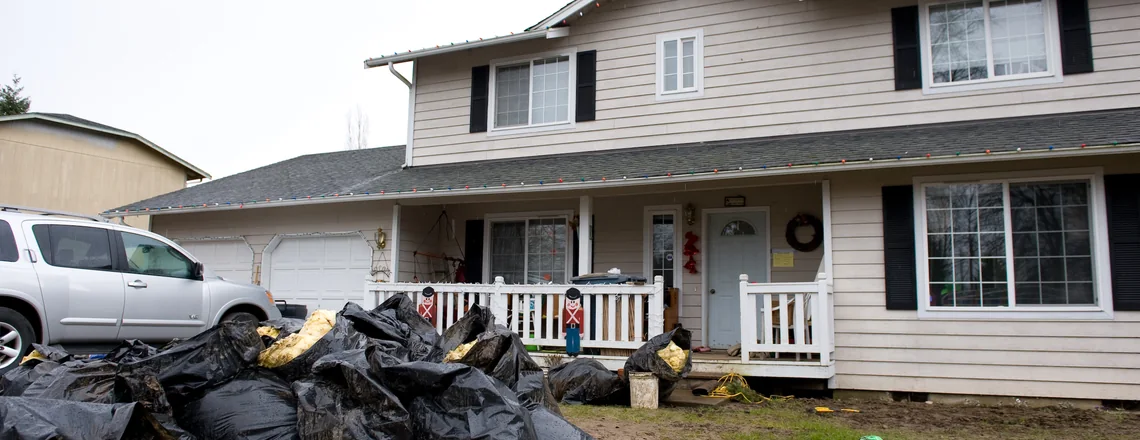
There is a brown ring on the back bedroom ceiling. Or the washer hose let go while you were at work and the hallway squelched for a week. Or the creek came up into the crawl space for the second time in four years and you are done. Now you want to sell, and you are trying to work out one thing: is this a repair you have to make first, or a problem you are allowed to hand to the buyer? You can sell it. Water damage does not block a sale anywhere in the country. What it does is sort your buyers, start a clock that runs faster than most people expect, and put one obligation on you that no amount of paint will cancel. Here is how the pieces actually fit together.
Key highlights
- The first 48 hours decide the rest. The EPA says to dry water damaged areas and items within 24 to 48 hours to prevent mold growth, and material dried inside that window usually will not grow anything.
- Sudden is covered, slow usually is not. Regulators describe the split plainly: insurers treat a gradual leak as a maintenance problem, not an accident.
- Flood is a different policy entirely. FEMA states that most homeowners insurance does not cover flood damage, and NFIP building coverage for a house tops out at $250,000.
- The 50 percent rule can force a house up onto piers. In a flood zone, repairs costing half the building’s pre-damage market value trigger a substantial damage determination by your local official.
- Lenders have a rating for this. Fannie Mae will not buy a loan on a C6 house until the deficiencies are repaired, which is why financed offers on wet houses keep falling through.
- An as-is cash sale skips the restoration contractor, the adjuster and the appraiser, and closes in weeks on a date you choose.
The short answer
Yes, you can sell a house with water damage, dried out or still damp, repaired or untouched. Three routes are realistic. Fix the source, pay for the restoration, keep every invoice and the dry readings, then list to the full market. List it as it stands, disclose what you know, and accept that financed buyers will come and go while their appraisers and underwriters argue about the stain. Or sell as-is to a cash buyer who prices the damage in and closes on your date with no lender in the room. Which one fits comes down to two numbers only you know: how much you are willing to spend on a house you are leaving, and how many more months you want to own it. The one route that reliably ends badly is painting the ceiling and saying nothing.
Where the water came from decides everything
Before anyone talks about price, somebody is going to ask where the water came from, and that single answer drives your insurance claim, your disclosure, and what the repair costs. Water gets into a house three ways, and they are treated as three different problems.
From inside, suddenly. A supply line lets go, the water heater splits, a washing machine hose fails, a pipe freezes and bursts. The damage is often dramatic and the cause is obvious.
From above, slowly. A roof that has been letting a little in for years, flashing that failed around a chimney, gutters that dump against the wall. The ceiling stain is usually the last step in a long process, not the first. If the roof is the real story, this is the companion guide: selling a house that needs a new roof.
From outside and below. Flood, surface runoff, groundwater, a storm surge. The water that comes in this way brings mud and whatever was in the street with it, and it is the one category your homeowners policy almost certainly excludes.
Whichever it was, the clock starts immediately. The EPA’s guidance is blunt: dry water damaged areas and items within 24 to 48 hours to prevent mold growth, and wet material dried inside that window usually will not grow anything. Miss it and you now own two problems instead of one, with mold’s own disclosure and cleanup rules stacked on top.
What your policy actually pays for
Most sellers assume the policy will sort it out. It often does not, and the reason is almost never the amount of damage. It is the timeline.
Washington State’s Office of the Insurance Commissioner draws the line about as clearly as a regulator can. Homeowner insurance often covers sudden, accidental water damage. Most policies will not cover gradual leaks that have been going on for any length of time, because, in the office’s words, insurers generally consider these issues maintenance problems, not sudden accidents. The same page adds the sentence that catches people out: your insurance will not cover water damage if you delay repairs. Mold gets a third treatment again, covered only in limited amounts and only when it comes from a loss that was covered in the first place.
The practical version: a burst supply line you reported the same afternoon is a claim. A shower pan that has been quietly wetting the subfloor since 2023 is a repair bill with your name on it.
And the difference is decided by an adjuster reading a moisture map, not by how bad the room looks.
There is a second thing worth knowing before you file. Claims follow the address. Property insurers buy claims and loss history data from specialty consumer reporting companies, and LexisNexis C.L.U.E. sits on the Consumer Financial Protection Bureau’s published list of them, tagged as a free report you are entitled to request. Your buyer’s insurer can see what was claimed on your house and price their quote accordingly. That matters because an expensive quote can sink a financed sale late, and because it quietly removes the appeal of keeping a loss off the books.
Flood zones and the 50 percent rule
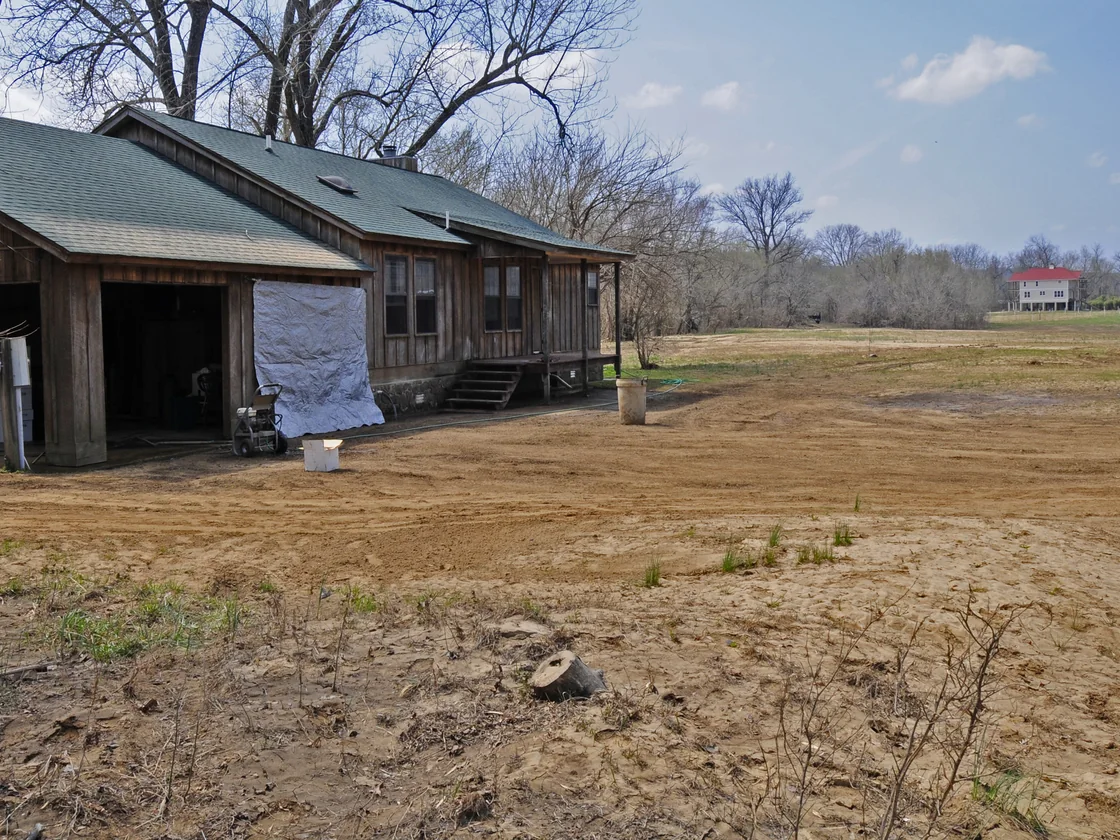
If the water came from outside, the rules change shape. FEMA says it in one line: most homeowners insurance does not cover flood damage. Flood is a separate policy, usually written through the National Flood Insurance Program, and there is typically a 30 day waiting period before it takes effect. The main exceptions are coverage that is mandated, coverage a government backed lender requires, and changes tied to a community flood map, which is how a buyer can bind a policy at closing even though you could not have bought one last week.
The limits are lower than most people expect. A FEMA proposal to raise them describes the program’s current coverage limits for one to four family structures as $250,000 for the structure and $100,000 for contents, bought separately, and notes that 61 percent of insured single family homes are already carrying the full $250,000. The same document says Congress last updated those caps 25 years ago.
Then there is the rule that surprises sellers most. In a Special Flood Hazard Area, a building is substantially damaged when the cost of repairs reaches 50 percent or more of its market value before the damage, and the cause of that damage does not matter. FEMA does not make the call and will not write to tell you. Your local building official or floodplain manager does, usually at the moment somebody applies for the repair permit. Once it is made, the building has to be brought into compliance with current local floodplain rules, and for a house that often means raising it onto piers, moving it, or tearing it down.
There is help attached, and it is worth knowing before you decide anything. NFIP policyholders in high risk areas may receive up to $30,000 of Increased Cost of Compliance coverage toward meeting those requirements after a substantial damage determination. It also applies to repetitive damage, meaning two qualifying flood losses in 10 years where the community ordinance carries a repetitive loss provision. Thirty thousand dollars does not lift most houses onto piers, but it is real money and it is tied to a determination you may not have asked for.
What the repair really involves
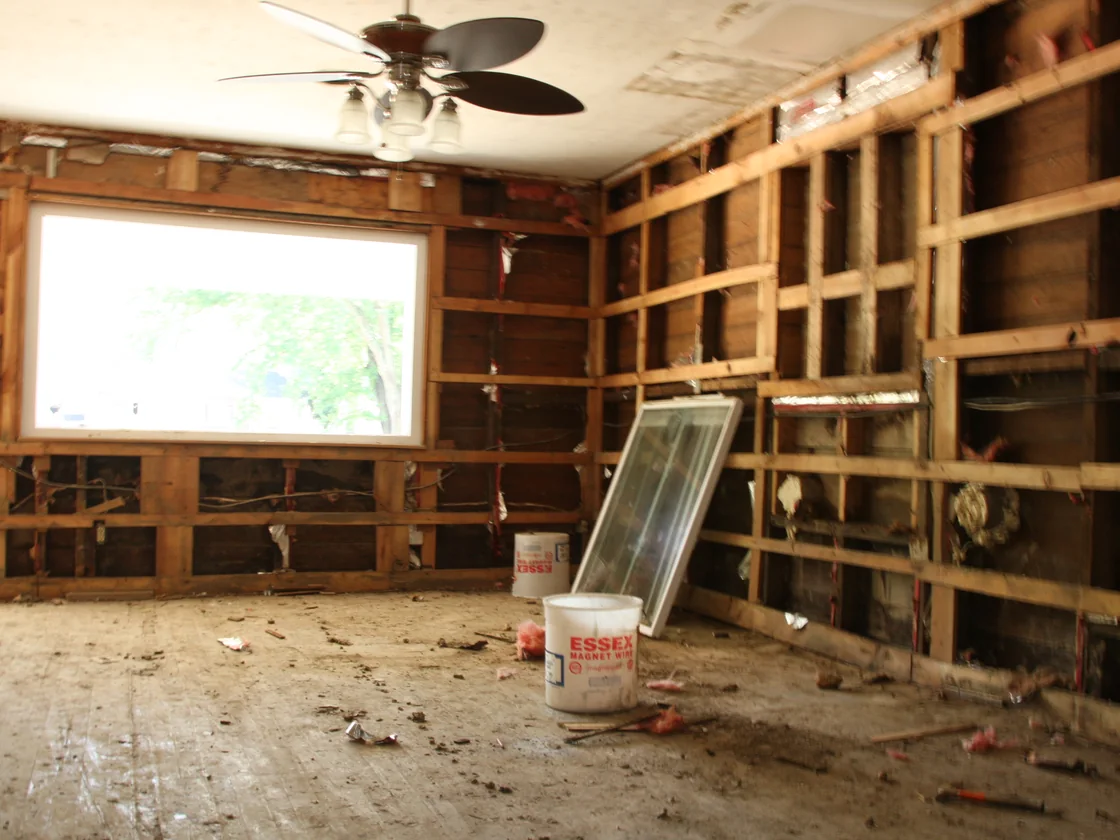
People picture a fan in the hallway for a weekend. A real dry out is destructive, and that is the point of it. Porous material that got wet comes out: carpet and pad, baseboard, the lower run of drywall, insulation inside the wall cavity, cabinet bases, sometimes the subfloor. Then the cavity gets dried and measured, and only after it reads dry does anything go back. Skipping to the rebuild is how a house ends up with a fresh wall and a problem behind it.
Two practical thresholds help you judge a quote. The first is that drying window: inside 24 to 48 hours you are drying a house, past it you are often remediating one. The second is the EPA’s rough line on mold, which is that an area less than about 10 square feet, roughly a patch three feet by three feet, can usually be handled without a contractor. Beyond that, or where there has been a lot of water damage, it recommends following its remediation guidance and hiring someone with mold experience.
Ask any bid to name three things in writing: the source of the water and how it will be fixed, exactly what is being removed, and what moisture reading the contractor will dry to before closing the walls. A bid that only lists rooms and a price is not a plan, and it is impossible to compare against the next one.
Why a financed buyer walks
This is the part that costs sellers the most time, because it happens late and it is not the buyer’s decision. Fannie Mae’s Selling Guide B4-1.3-06 tells the appraiser to identify and describe any physical deficiency that could affect the safety, soundness or structural integrity of the property, and to complete the appraisal subject to the repairs being done. Where the issue is dampness or settlement specifically, the appraisal has to comment on the effect on value and marketability, and the lender must either show the condition was corrected or get a professional report saying it poses no threat of structural damage.
The condition ratings decide the rest. A C5 house has obvious deferred maintenance and needs significant repairs, and it is still eligible in as-is condition. A C6 house has damage or deficiencies severe enough to affect safety, soundness or structural integrity, and a loan on it is not eligible for sale until the work is done and the rating comes up to at least C5. One wet, unrepaired room can move a house across that line, and nobody tells you which side you are on until the appraisal lands in week five.
That is the whole mechanism behind a sentence sellers hear constantly and rarely get explained: the house is cash only. It is not a judgment about the house. It is a rating in an underwriting guide.
What you have to tell a buyer
Disclosure is the one obligation you cannot repair your way out of or negotiate away, and the forms ask about water in more detail than almost anything else in the house.
Texas puts it in the statute. The seller’s disclosure notice under Property Code section 5.008 asks whether the seller is aware of previous water penetration into a structure on the property due to a natural flood event, whether there is present flood insurance coverage, and whether the property sits wholly or partly in a 100 year floodplain.
New York asks it from several angles at once. The property condition disclosure statement in Real Property Law section 462 includes question 28, is there any rot or water damage to the structure or structures, question 38, are there any flooding, drainage or grading problems that resulted in standing water on any portion of the property, and question 39, has the structure experienced any water penetration or damage due to seepage or a natural flood event. Questions 10 through 12 cover FEMA designated floodplains and the special flood hazard area. Under section 465, a seller who willfully fails to perform the disclosure requirement is liable for the actual damages suffered by the buyer, on top of any other remedy available.
Your own state’s form will differ in wording and not much in spirit. Write down what happened, when, what was done about it and by whom, and hand over the invoices and the dry readings if you have them. A documented repair is one of the most valuable things you can give a buyer, because it answers the question before an inspector raises it. A stain with no story attached invites the worst assumption in the room.
Your options, side by side
For a seller looking at a damaged ceiling and a calendar, the honest menu is short:
| Your option | Best when | The trade-off |
|---|---|---|
| Restore it, then list | The source is fixed, you can fund the dry out and rebuild, and you want the full financed buyer pool | You pay the contractor up front on a house you are leaving, you wait out the work, and the appraisal still has an opinion at the end |
| List as-is with an agent | The damage is cosmetic and dry, and you can absorb some renegotiation after the inspection | Inspections still happen, appraisers still write “subject to”, and a house rated C6 is not financeable until it is repaired |
| Sell as-is for cash | The house is wet, half repaired, in a flood zone, or simply not worth another contractor to you | The price reflects the work left behind; in exchange there is no restoration, no cleanout, no appraiser and no financing to fall through |
| File, wait, and decide later | The loss is clearly sudden, well documented, and the adjuster is already engaged | Carrying costs keep running, a denied claim costs you the months as well as the money, and delayed repairs can void the coverage you were waiting on |
How an as-is cash sale works here
The mechanics are deliberately dull, which is most of the appeal. You describe the house honestly: where the water got in, when, how far it travelled, what was done about it and what was not. You get a written cash offer, usually inside about a day. If you accept, a title company takes over, confirms the title, clears any liens or unpaid charges out of the proceeds and prepares the deed.
There is no lender, so no appraiser writes “subject to” on anything, no underwriter reads a moisture report in week five, and no carrier has to agree to bind a policy before the money can move. Closing lands on a date you pick, often two to three weeks out once the title is clear, or later if you need the time. The honest timeline math is here: how fast a cash sale really closes.
Nothing gets repaired and nothing gets emptied. The soaked carpet stays, the swollen baseboard stays, the furniture you do not want stays. Take what matters to you and leave the rest. If you already paid a restoration company and have the invoices and the final moisture readings, bring them, because documented work lifts the number. The plain version of the rest is here: what selling a house as-is actually means.
How Sterling Home Offer helps
Wet houses are an ordinary week for us rather than an exception we tolerate. Here is what we offer, in writing. A no-obligation cash offer in about 24 hours, built on the real condition of the house and real nearby sales, not a headline number that shrinks once somebody opens a wall. Strictly as-is, so no restoration contractor, no dry out, no cleanout on your side. No agent commissions and no fees, so the offer is the number you keep. And your date is the date, whether that is two weeks out or parked until a move, a probate or an insurance decision is finished. We buy single-family houses, and the ones with a story behind the drywall are most of what we see.
The bottom line
Water damage does not stop a sale. It sorts your buyers and it hands you a disclosure you have to write honestly, and those are two separate problems with two separate answers. Find the source first, because nothing else holds until that is fixed. Watch the 24 to 48 hour window, because it is the difference between drying a house and remediating one. Learn which of the three kinds of water you are dealing with, since that decides whether your policy, an NFIP policy, or nobody at all is paying. Then choose a route deliberately: spend the money, reach the whole market, and hand over the paperwork, or keep the money and sell as-is to somebody who prices the damage in and closes on your calendar. What almost never works is a fresh coat of ceiling paint and the hope that the inspector is in a hurry.
Sources
- A Brief Guide to Mold, Moisture and Your Home: dry water damaged areas and items within 24 to 48 hours to prevent mold growth, and fix the moisture source or mold returns (U.S. Environmental Protection Agency)
- Mold Cleanup in Your Home: an area less than about 10 square feet, roughly three feet by three feet, can usually be handled without a contractor, and porous materials such as ceiling tiles and carpet may have to be thrown out (U.S. Environmental Protection Agency)
- Leaks, water damage and mold: homeowner insurance often covers sudden, accidental water damage, most policies do not cover gradual leaks because insurers consider them maintenance problems, insurance will not cover damage caused by delaying repairs, and mold coverage is limited and applies only to a covered loss (Washington State Office of the Insurance Commissioner)
- Flood Insurance: most homeowners insurance does not cover flood damage, flood coverage is a separate policy, and there is typically a 30 day waiting period with exceptions including coverage required by a government backed lender (Federal Emergency Management Agency)
- NFIP legislative proposal, increase maximum coverage limits: current NFIP limits for one to four family structures are $250,000 for structure and $100,000 for contents, 61 percent of insured single family residences carry $250,000 of building coverage, and Congress last updated the caps 25 years ago (Federal Emergency Management Agency)
- Substantial Improvement and Substantial Damage: a structure in a Special Flood Hazard Area is substantially damaged when repair costs reach 50 percent or more of its pre-damage market value whatever the cause, the local building official or floodplain manager makes the determination, and the building must then be brought into compliance with local floodplain regulations (Federal Emergency Management Agency)
- Increased Cost of Compliance Coverage: policyholders in high risk flood areas may receive up to $30,000 after a substantial damage determination, and the coverage also applies to repetitive damage, meaning two qualifying flood losses in 10 years (Federal Emergency Management Agency)
- Selling Guide B4-1.3-06, Property Condition and Quality of Construction of the Improvements: deficiencies affecting safety, soundness or structural integrity, appraisals completed subject to repairs, the dampness and settlement requirement, and the C5 and C6 condition ratings (Fannie Mae)
- Texas Property Code section 5.008, seller’s disclosure of property condition: previous water penetration into a structure due to a natural flood event, present flood insurance coverage, and the 100 year floodplain box (Texas Public Law)
- New York Real Property Law section 462, property condition disclosure statement: question 28 on rot or water damage, question 38 on flooding, drainage or grading problems, question 39 on water penetration or damage due to seepage or a natural flood event, and questions 10 to 12 on FEMA designated floodplains (New York State Senate)
- New York Real Property Law section 465, liability: a seller who willfully fails to perform the disclosure requirement is liable for the actual damages suffered by the buyer, in addition to other remedies (New York State Senate)
- List of consumer reporting companies: property insurers buy claims and loss history data to set eligibility and rates, and LexisNexis C.L.U.E. is listed under personal property insurance as a free report you may request (Consumer Financial Protection Bureau)
Not paying for a dry out on a house you are leaving?
We buy houses with water damage as-is, for cash. No restoration contractor, no adjuster to wait on, no cleanout. Get a no-obligation cash offer in 24 hours and pick your closing date.
Get my cash offer or call (888) 260-1777Water damage seller FAQs
Do I have to repair water damage before I can sell the house?
No. No state makes the repair a condition of selling. What the damage changes is who is allowed to buy. A financed buyer brings an appraiser, and Fannie Mae requires an appraisal to be completed subject to the repair of any deficiency that affects safety, soundness or structural integrity, with a condition rating of at least C5 before the loan is eligible. A cash buyer brings no appraiser and no underwriter, prices the work in and closes on your date. The part you cannot skip is telling the buyer what you know.
Will my homeowners insurance pay for the water damage?
It depends almost entirely on how the water got in. Washington State’s Office of the Insurance Commissioner puts the line plainly: homeowner insurance often covers sudden, accidental water damage, while most policies will not cover gradual leaks, because insurers generally consider those maintenance problems rather than sudden accidents. The same office warns that your insurance will not cover water damage if you delay repairs. A supply line that burst last Tuesday and a shower pan that has been seeping for three years are two different claims, and only one of them usually pays.
Does homeowners insurance cover flooding?
No. FEMA states it directly: most homeowners insurance does not cover flood damage, and flood coverage is a separate policy. Under the National Flood Insurance Program the current limits for one to four family structures are $250,000 for the building and $100,000 for contents, bought separately. There is typically a 30 day waiting period before an NFIP policy takes effect, with exceptions including coverage a government backed lender requires at closing.
What is the 50 percent rule and why does it matter to a seller?
In a Special Flood Hazard Area a building counts as substantially damaged when the cost of repairs reaches 50 percent or more of its market value before the damage, whatever the cause. Your local building official or floodplain manager makes that call, not FEMA, usually when somebody applies for the repair permit. Once the determination is made, the building has to be brought into compliance with local floodplain rules, which can mean raising it onto piers. NFIP policyholders may receive up to $30,000 of Increased Cost of Compliance coverage toward that work.
Does a water claim follow the house to the next owner?
The claims history does. Property insurers buy claims and loss history data from specialty consumer reporting companies, and LexisNexis C.L.U.E. is one of them on the Consumer Financial Protection Bureau’s published list. A buyer’s insurer can see what was claimed on the address and price accordingly, which is one reason a quiet, unreported leak is not the clean solution it looks like. You can request your own report for free and the CFPB recommends checking it for accuracy.
The carpet and drywall are ruined. Do I have to clear the house out first?
Not for an as-is cash sale. The soaked carpet stays, the swollen baseboard stays, the furniture you do not want stays. You take what matters to you and leave the rest, and the buyer handles the cleanout after closing. The price reflects the work that is left. What you still owe the buyer is an honest description of what happened, where the water came from and what was done about it.
How fast does water damage turn into a mold problem?
Fast enough that the clock matters more than the paperwork in the first two days. The EPA’s guidance is to dry water damaged areas and items within 24 to 48 hours to prevent mold growth, and it notes that material dried inside that window usually will not grow anything. After that the question stops being about water and starts being about mold, which carries its own disclosure and cleanup rules.
This article is general information, not legal, tax or insurance advice. Disclosure requirements, floodplain ordinances and policy language differ by state and by community and change over time, and every house and every claim is different. Confirm your situation with licensed professionals in your state, and with your own local building department, before making decisions about your home or a claim.