
Selling a Fire-Damaged House: Insurance, Disclosure, and As-Is Buyers
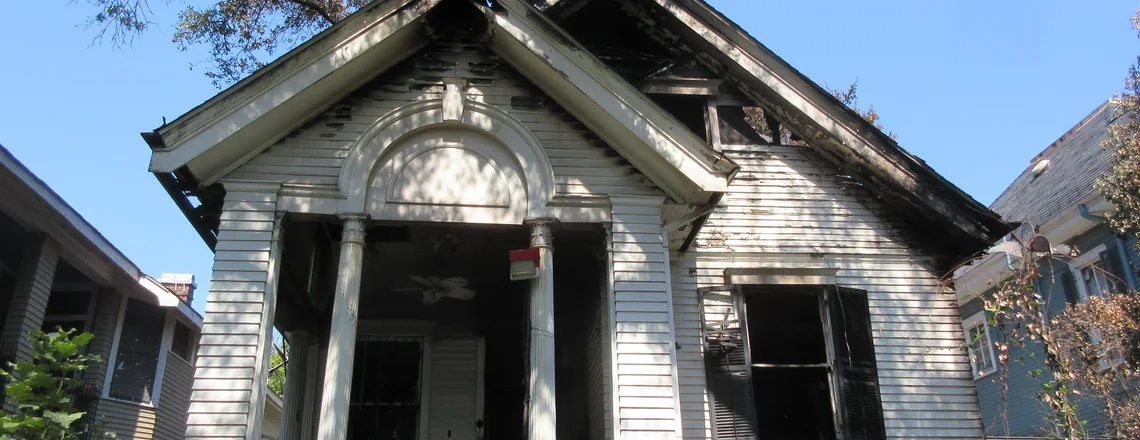
A house fire does two things to a property at once, and only one of them is visible. The first is the damage you can see: the burnt room, the hole the firefighters cut in the roof, the soot that went everywhere the smoke went. The second is the paperwork knot that forms around the house within about a week, and that is usually what decides whether you rebuild or sell. The insurance check is written to you and your mortgage company together. The adjuster’s number and the contractor’s number do not match. Your policy may stop covering the house once nobody lives in it. And no buyer with a mortgage can touch the place until it is fixed. This guide walks through all of it in order, in plain words, so you can make the decision with real numbers instead of guesses.
Key highlights
- Fire is common and expensive. There were 344,600 residential building fires in the United States in 2023, with roughly $11.3 billion in property loss, and cooking alone accounted for 167,800 of them.
- You do not control the insurance money. On a Fannie Mae loan that is current, the servicer releases an initial amount, then pays the rest in draws as inspections confirm the work.
- An unrepaired fire makes the house cash-only. Fannie Mae will not buy a loan on a property rated C6, so a financed buyer cannot close until the damage is repaired.
- You still have to disclose it. Ohio’s state form asks outright about previous or current fire or smoke damage, and selling as-is does not switch that off.
- An as-is cash sale takes the house exactly as it stands, soot and all, and closes in weeks on the date you pick.
The short answer
You can sell a fire-damaged house, and you have two honest routes. Route one: use the insurance proceeds to rebuild, pull the permits, get the work signed off, then list the house like any other. That works when the payout is close to the real cost, you have the months and the patience, and the house is worth more finished than the rebuild costs. Route two: sell it as-is to a cash buyer, who takes the house in its current condition, and lands a closing in roughly two to three weeks. Everything in between, half-finishing the repairs, listing it burnt and hoping a financed buyer slips through, or leaving it boarded while you think, tends to cost more than either real route. The rest of this guide is about telling the two apart for your house.
The first week, before you think about selling
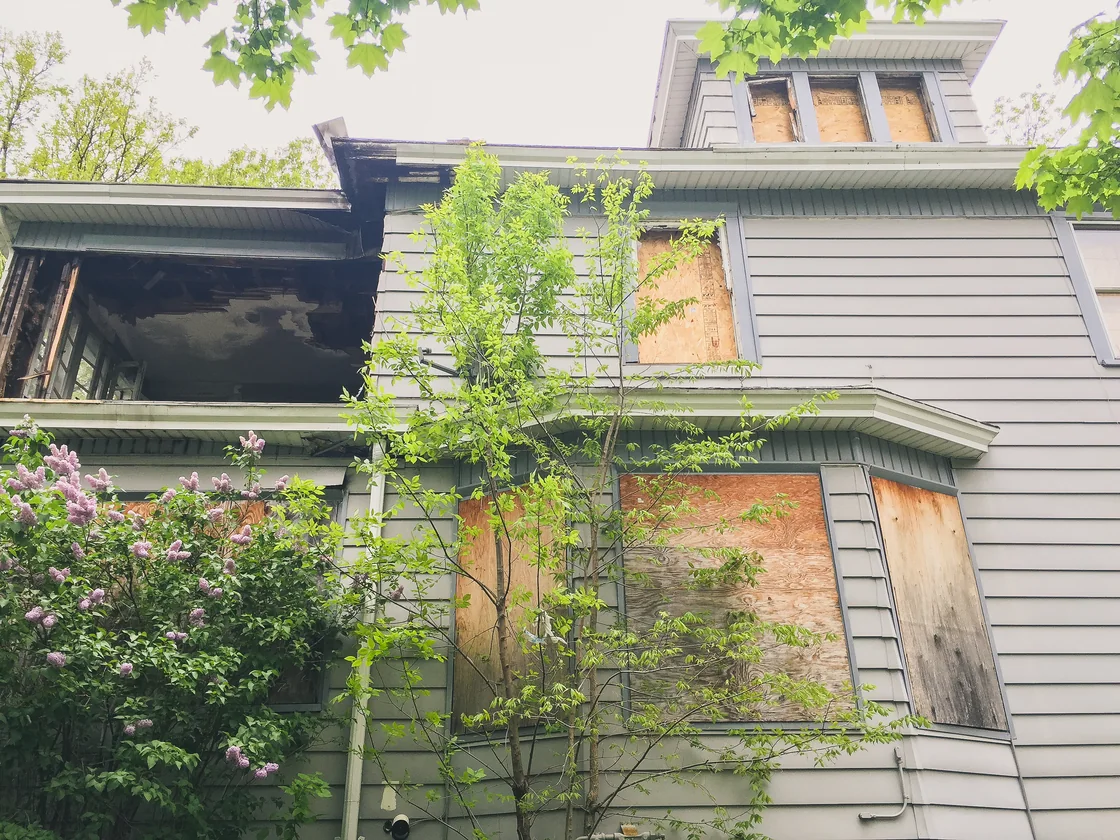
The U.S. Fire Administration publishes a short booklet called After the Fire, and its checklist is the right order of operations. Do not go back inside until the fire department says it is safe, because floors and walls may not be as sound as they look. Firefighters will usually have shut off or disconnected the water, electricity and gas, and you should not turn any of them back on yourself. In many cases you will need to board up windows and doors so nobody can get in, and if the house will stand empty, tell your local police department.
Then handle the three pieces of paper that every later conversation depends on.
The fire incident report. Write down the fire department’s name and nonemergency number, the name of the fire marshal or investigator, and the incident report number. Your insurer will want it, a buyer’s attorney may want it, and it is the only neutral account of what happened.
Your insurance claim. Call the carrier the same day and ask what to do first, including what they expect you to do to keep the house safe until it is repaired. Ask for any cost estimate in writing.
Your mortgage company. Report the fire to the servicer. This feels like the last thing you want to do, and it is also the step that stops a small problem from becoming a large one, because the loss check is going to have their name on it. Save every receipt you spend on the fire, because the insurer and your tax return will both ask.
Vacancy is the trap nobody warns you about. A house that nobody lives in is treated differently by most insurers, and the period right after a fire is exactly when the house is most exposed to weather, theft and trespass.
Call your carrier and ask, in writing, what your coverage does once the house is empty. The same problem hits any empty property: selling a vacant house.
Where the insurance money actually goes
Most people assume the claim money arrives and the rebuild begins. Two things usually get in the way.
First, how your policy settles the loss. New York’s Department of Financial Services puts the difference plainly: replacement cost coverage pays the amount it would cost to replace or repair your home without deducting anything for depreciation, while insurers generally reimburse actual cash value, meaning replacement cost less depreciation. On a house with a twenty year old roof and thirty year old kitchen, that deduction is not a rounding error. Find the loss settlement section of your policy and read it before you decide anything, because that one paragraph sets the size of the pile you are working with.
Second, the check is not yours alone. If there is a mortgage, the loss draft is normally payable to you and the servicer together, and the servicer controls the release. Fannie Mae’s servicing rules are a good picture of how that works in practice. Money for contents and living expenses goes to the borrower right away. For the structure, on a loan that is current or less than 31 days delinquent, the servicer releases an initial amount up to the greatest of $40,000, 33 percent of the proceeds, or the amount by which the funds exceed what is owed. The rest is released in draws, based on periodic inspections of the repair progress, with the servicer approving the repair plan and the bids first. Undisbursed money sits in an interest-bearing custodial account held for the borrower, and the interest is paid to the borrower once repairs are complete.
If the loan is 31 or more days delinquent the leash is shorter: $5,000 or less goes out in a single disbursement, and anything larger starts with 25 percent of the total, capped at the greater of $10,000 or the amount above what is owed, with the remainder in increments of no more than 25 percent after inspections, and a final inspection at the end.
Read that again as a seller rather than a borrower, because it is the real reason many fire files end in a sale. You are being asked to run a construction project on money that is handed to you in pieces, after someone else approves the bids, on a house you may not even be living in.
Why a burned house is a cash house
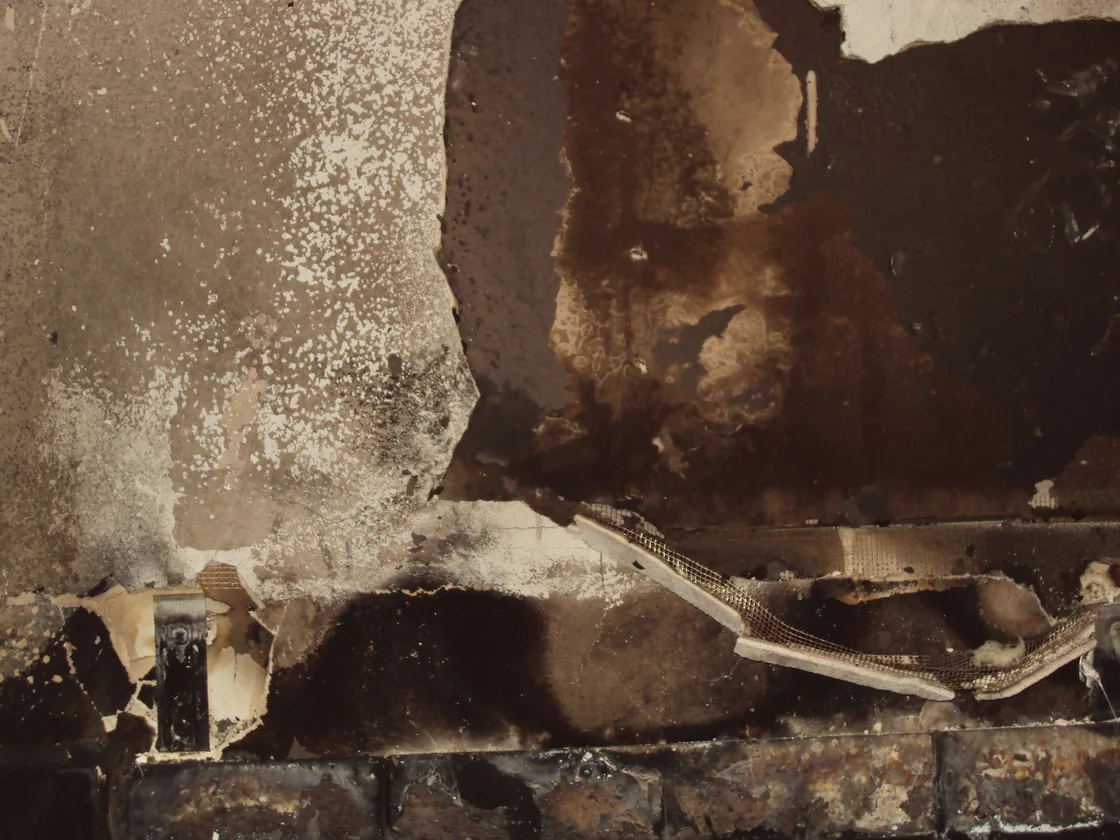
Here is the mechanism, and it is worth understanding because it explains every strange thing that happens to your buyer pool after a fire.
An appraiser gives every house a condition rating. Fannie Mae defines C6 as improvements with substantial damage or deferred maintenance, with deficiencies severe enough to affect the safety, soundness or structural integrity of the improvements, needing substantial repairs including many or most major components. A house with real fire damage lands there easily. And the rule attached to it is short: loans secured by properties with a condition rating of C6 are not eligible for sale to Fannie Mae. The deficiency has to be repaired, and the property has to rate at least C5, before the loan can be sold. If any portion of the dwelling is rated C6, the whole dwelling is rated C6.
That is why the nice couple who loved the house cannot buy it. Their lender is not being difficult. The loan simply cannot be delivered against a burned house, so the appraisal gets written “subject to” the repairs being finished, and the repairs have to happen before closing. Somebody has to pay for them first, and that somebody is you.
The moment that becomes clear, your real buyer pool is people who do not need a lender’s permission. That is not a sales pitch, it is how the secondary mortgage market is built. The same mechanism quietly shrinks the buyer pool for houses with water damage and for houses with mold, which is usually what grows after the firefighting water soaks the walls.
What you have to tell a buyer
Selling as-is changes who pays for the repairs. It does not change what you have to say about them.
Some states ask about fire by name. Ohio’s Residential Property Disclosure Form, the one the state prescribes, asks: “Do you know of any previous or current fire or smoke damage to the property?” If the answer is yes, you describe it and indicate any repairs completed. The form is a statement of what the owner actually knows, not a warranty. Ohio also gives the buyer a remedy if you skip it: under Revised Code 5302.30(K), a purchaser who never received the form can rescind the contract by delivering a signed, dated rescission before all three of the date of closing, 30 days after the owner accepted the offer, and three business days after receiving the form.
Other states set the timing rather than the question. Texas requires the seller’s notice to be delivered to the purchaser on or before the effective date of the contract that binds the purchaser to buy. The lesson is the same everywhere: it goes in writing, and it goes in early, not after the buyer’s inspector finds char in the attic.
Say what was repaired, and prove it. A fire that was properly repaired under permit is a normal conversation. A fire that was repaired by whoever was available, without permits, is a different conversation, and it tends to surface at the worst possible moment. If that is your situation, read this first: selling a house with unpermitted work. If the city has already written the house up while it sat, this one applies too: selling a house with code violations.
Rebuild or sell: the math that actually decides it
Put four numbers on one page and the answer usually appears on its own.
- The payout. What the insurer will actually release for the structure, after depreciation, after the deductible, and in the pieces described above.
- The real repair cost. Not the adjuster’s estimate, a contractor’s written bid, and ideally three of them. The Federal Trade Commission’s advice for hiring a contractor is worth following to the letter: consider only contractors who are licensed and insured, check the licence with your state or county and ask for proof of insurance, get multiple estimates and do not automatically take the lowest, insist on a written contract with the licence number and the start and completion dates filled in, and be wary of anyone who wants everything up front or only takes cash. Never make the final payment until the work is done and you are satisfied. Fire losses attract door-knockers.
- The months. Permits, demolition, framing, systems, inspections, finishes. Every month the house is not finished is a month of taxes, utilities, insurance if you can keep it, and a loan that keeps accruing.
- The finished value. What the rebuilt house is actually worth on your street, not what it cost you to rebuild it. These two numbers are allowed to disagree, and in a modest market they usually do.
If the payout plus your own money comfortably covers the bid, and the finished value clears the total with room, rebuilding can be the right call. If the payout is well short, or the house is a rental you do not want to project-manage from another state, or the loan is behind and the draws will come in 25 percent slices, selling as-is is usually the cleaner exit. For the general version of that comparison, we wrote it out here: how much do you lose selling a house as-is.
Your options, side by side
For a seller holding a fire-damaged house, the realistic menu is short:
| Your option | Best when | The trade-off |
|---|---|---|
| Rebuild with the insurance money, then list | The payout is close to a real contractor bid, the loan is current, and you can manage a build for months | You run the project on draws someone else approves, carry the house throughout, and only then meet the market |
| List it as-is with an agent | The damage is light and cosmetic, the house is still habitable, and an appraiser would rate it above C6 | Financed offers can die at the appraisal, inspections reopen the price, and investors are most of the pool anyway, minus commission |
| Sell as-is for cash | The damage is structural, the payout falls short, the house is empty or out of state, or you simply want it finished | The price reflects the rebuild and the risk; in exchange there are no repairs, no cleanout, no showings, no lender, and a date you pick |
| Board it up and decide later | The claim is genuinely unresolved and you need weeks, not months, to get an answer | Vacancy limits on your policy, weather through the open roof, theft and trespass, and a house that is worth less every season |
How an as-is cash sale works after a fire
The mechanics are refreshingly boring, which is the whole point when the rest of your month has not been. You describe the house honestly: what burned, what the fire report says, whether a claim is open, what the adjuster has paid so far, and what is still standing. You get a written cash offer, usually within about 24 hours. If you accept, a title company takes over. It searches title, finds the mortgage payoff and any liens, and prepares a settlement statement that clears them out of the proceeds. There is no lender on the buyer’s side, so there is no appraisal, no financing contingency and no condition rating deciding your fate. Closing lands on the date you choose, often two to three weeks out when title is clean, or later if you need time. You take what you want from the house and leave the rest, including whatever the smoke ruined. If you want the plain definition of what as-is covers, it is here: what selling a house as-is actually means, and the day by day timeline is here: how fast a cash sale really closes.
One piece of homework is specific to fire files. If a claim is open, tell the buyer early and get the handling of the remaining proceeds written into the contract. Insurance money and sale proceeds have to be squared with the payoff at closing, and that is a half-hour conversation in week one or a three-day delay in week three.
How Sterling Home Offer helps
We buy single-family houses for cash, and fire-damaged houses are a normal part of that work rather than an exception. Our promise is short. A no-obligation cash offer in about 24 hours, built on the real condition of the house and real sales near it, not a number that shrinks at the closing table. Strictly as-is: no repairs, no cleanout, no staging, boarded windows and soot-stained rooms welcome. No agent commission and no fees, so the offer is the number. The title company clears the mortgage and any liens out of the proceeds. And your date is the date, whether that means closing quickly or parking the closing until the claim, the probate or your move is sorted. If you would rather start with the area page than the guide, here is where we buy.
The bottom line
Fire is not rare. There were 344,600 residential building fires in the United States in 2023 and about $11.3 billion in property loss, and the great majority of those houses were ordinary houses belonging to ordinary people. What makes the aftermath hard is not the damage itself, it is that three separate parties get a vote on your house at the same time: the insurer deciding what it owes, the servicer deciding when you may spend it, and the next buyer’s lender deciding whether it will lend at all. Rebuilding means playing all three hands for months. Selling as-is means ending all three in one closing. Both are legitimate. The one that is not is leaving the house open and undecided, because that is the only option on the list that gets worse every week on its own.
Sources
- Residential Fire Estimate Summaries, 2014 to 2023: 344,600 residential building fires and $11,266,200,000 in dollar loss in 2023 (U.S. Fire Administration, FEMA)
- Cooking fires in residential buildings: 167,800 fires and $572,700,000 in dollar loss in 2023 (U.S. Fire Administration, FEMA)
- After the Fire, FA-46, January 2019: do not enter until the fire department says it is safe, utilities disconnected by firefighters, boarding up openings, notifying police of a vacant site, contacting the mortgage company, saving receipts, and recording the fire incident report number (U.S. Fire Administration)
- Homeowners Insurance: replacement cost as the amount it would cost to replace or repair without deducting for depreciation, and actual cash value as replacement cost less depreciation (New York State Department of Financial Services)
- Servicing Guide B-5-01, Insured Loss Events: contents and living expense proceeds released immediately, an initial structural release of the greatest of $40,000, 33 percent of proceeds or the amount above the debt, later draws on periodic inspection, the $5,000 and 25 percent rules for delinquent loans, and the interest-bearing custodial account (Fannie Mae)
- Selling Guide B4-1.3-06, Property Condition and Quality of Construction: the C5 and C6 definitions, loans on C6 properties not eligible for sale to Fannie Mae, repair to at least C5 before sale of the loan, and appraisal “subject to” completion of repairs (Fannie Mae)
- Residential Property Disclosure Form, effective 06/2022: “Do you know of any previous or current fire or smoke damage to the property?”, the actual knowledge standard, and the rescission rights under Revised Code 5302.30(K) (Ohio Department of Commerce)
- Texas Property Code Section 5.008: the seller’s disclosure notice must be delivered to the purchaser on or before the effective date of an executory contract binding the purchaser to purchase the property
- How To Avoid a Home Improvement Scam: use only licensed and insured contractors, verify the licence with your state or county, get multiple estimates and do not automatically choose the lowest bidder, get a written contract with the licence number and dates, and treat “everything up front or cash only” as a warning sign (Federal Trade Commission)
Need to sell a fire-damaged house?
We buy houses as-is for cash: fire damage, smoke, water from the hoses, boarded windows and open claims welcome. No repairs, no cleanout, no fees. Get a no-obligation cash offer in 24 hours and pick your closing date.
Get my cash offer or call (888) 260-1777Fire damage seller FAQs
Can I sell a fire-damaged house without repairing it first?
Yes. Nothing in a normal sale requires you to rebuild first. What changes is who can buy it. A house with unrepaired fire damage usually cannot be financed, because Fannie Mae will not buy a loan on a property rated C6, meaning damage severe enough to affect safety, soundness or structural integrity, until it is repaired to at least C5. That leaves cash buyers, who can close on the house exactly as it stands.
Do I have to tell a buyer about a fire that was fully repaired?
In most states yes, and in some the form asks you outright. Ohio’s state disclosure form asks whether you know of any previous or current fire or smoke damage to the property, and if the answer is yes you describe it and list the repairs completed. A fire that was properly repaired and permitted is a much easier conversation than one a buyer discovers later, so write it down and attach the paperwork.
My mortgage company is holding the insurance check. Can I still sell?
Yes, and this is one of the most common reasons people decide to sell instead of rebuild. The loss check is normally payable to you and your servicer together, and on a Fannie Mae loan that is current the servicer releases an initial amount, then pays the rest in draws as inspections confirm the repairs. If you sell, the loan gets paid off at closing and the servicer and the insurer settle up on the remaining proceeds. Tell both of them early, because the payoff and the claim have to be squared at the closing table.
Will the insurance payout cover what it costs to rebuild?
It depends on which loss settlement your policy uses. Replacement cost pays what it would cost to repair or replace without deducting for depreciation. Actual cash value pays replacement cost less depreciation, which on an older house can be a lot less. Read the loss settlement section of your policy before you make any decision, and get the adjuster’s estimate in writing so you can compare it to a real contractor bid.
How much less will I get selling as-is after a fire?
There is no single number, and anyone who quotes you one without seeing the house is guessing. A cash offer is built backwards from what the house will be worth once it is rebuilt, minus the cost of the rebuild, the months of carrying it and the buyer’s risk. The honest comparison is not the offer against an undamaged house. It is the offer against what you would net after paying for the rebuild yourself, carrying the house while it happens, and then selling.
The house is unlivable and my insurer is talking about vacancy. What now?
Call your carrier and ask in plain terms what happens to coverage while the house sits empty, and get the answer in writing. Many policies restrict or exclude coverage on a vacant dwelling, which is exactly the period when a burned house is most exposed to weather, theft and trespass. Secure the openings, keep the policy alive if you can, and treat the clock as real. A house that sits open through one winter is a different house by spring.
How fast can a cash sale close after a fire?
Usually two to three weeks once the title company confirms the title is clean, and the date is yours to pick. The slow part is almost never the house. It is the paperwork around it: the mortgage payoff, any open claim, a probate file if the owner has died, and the lien search. Line those up early and the closing is boring, which is the point.
This article is general information, not legal, tax or insurance advice. State disclosure requirements, policy wording, loan servicing rules and local permit practice change over time, and every fire and every sale is different. Confirm your own situation with your insurer, your mortgage servicer and licensed professionals in your state before making decisions about your home.